English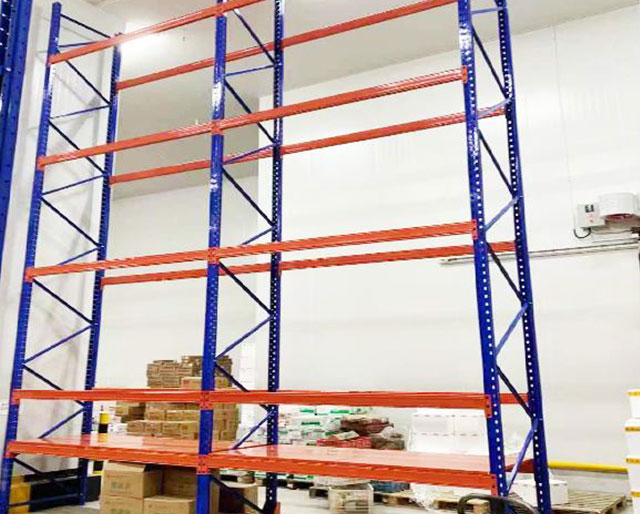
Single Sided vs Double Sided Cantilever Rack: Pros, Cons & When to Use Each
Read More

Search
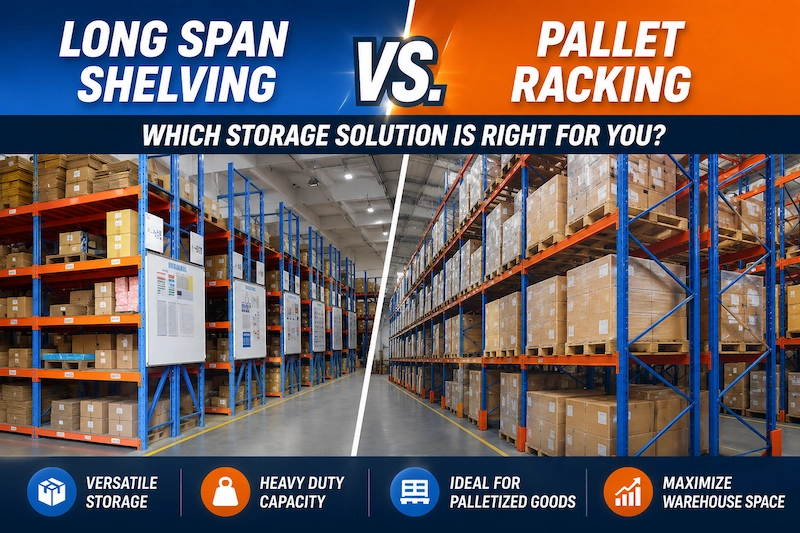
Choosing between long span shelving and pallet racking can significantly impact warehouse efficiency, storage density, labor productivity, and future scalability. While both systems are widely used in warehouses, distribution centers, retail stockrooms, and industrial facilities, they serve very different operational purposes.
If your products are frequently picked by hand and stored in cartons or individual units, long span shelving is often the better choice. If your inventory is palletized and moved by forklifts, pallet racking usually delivers superior storage capacity and operational efficiency.
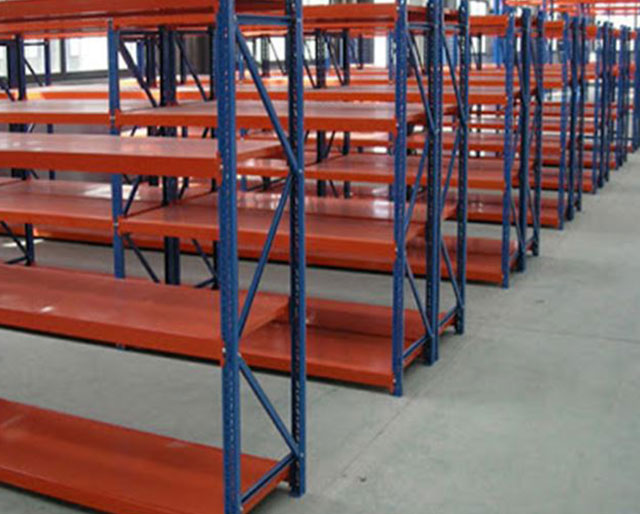
Long span shelving is designed for manual loading and unloading of medium to heavy products. It bridges the gap between light-duty shelving and heavy-duty pallet racking.
Typical applications include:
E-commerce fulfillment centers
Auto parts warehouses
Retail backrooms
Industrial spare parts storage
Archive and document storage
Long span shelving generally supports loads ranging from 200kg to 800kg per level depending on beam specifications and shelf materials.
Pallet racking is engineered for storing palletized goods using forklifts, reach trucks, or stackers.
Common applications include:
Manufacturing plants
3PL logistics facilities
Cold storage warehouses
Wholesale distribution centers
Import and export storage facilities
A standard pallet rack bay may support several tons of inventory while maximizing vertical warehouse space.
| Factor | Long Span Shelving | Pallet Racking |
|---|---|---|
| Loading Method | Manual | Forklift |
| Storage Unit | Boxes, cartons, loose items | Palletized goods |
| Typical Capacity | 200-800kg per shelf | 500-5000kg+ per level |
| Installation Cost | Lower | Higher |
| Warehouse Height Usage | Moderate | Excellent |
| Accessibility | Very High | Depends on forklift access |
| Best For | Order picking | Bulk storage |
Businesses with frequent order picking operations benefit from easy access to every SKU.
If you manage hundreds or thousands of SKUs, long span shelving offers excellent organization and visibility.
Companies without forklifts can reduce capital expenditure by choosing long span shelving systems.
Compared with pallet racking, installation costs are generally lower.
Palletized inventory is naturally suited for pallet racking systems.
High-bay warehouses benefit from vertical storage capabilities.
Manufacturers and distributors storing bulk inventory often achieve greater operational efficiency.
If forklifts are part of daily operations, pallet racking maximizes equipment productivity.
Long span shelving generally offers lower upfront costs. However, pallet racking often provides a lower storage cost per pallet position in large facilities.
When evaluating costs, consider:
Equipment requirements
Installation expenses
Warehouse height utilization
Future expansion plans
Labor efficiency
Demand for both systems continues to grow. Businesses searching for heavy duty rack philippines solutions often choose long span shelving for retail and spare-parts storage, while logistics operators typically prefer pallet racking for high-volume inventory management.
Absolutely.
Many modern warehouses combine pallet racking for reserve inventory and long span shelving for picking locations. This hybrid approach often delivers the best balance between storage density and operational efficiency.
Long span shelving generally has lower initial investment costs.
Pallet racking typically provides higher storage capacity.
Yes. Depending on design, individual shelf levels can support several hundred kilograms.
It can, but it is primarily designed for forklift operations.
If your warehouse focuses on manual picking, SKU variety, and operational flexibility, long span shelving is often the ideal solution. If your inventory is palletized and stored in bulk quantities, pallet racking delivers superior storage density and scalability. For many growing businesses, combining both systems creates the most efficient warehouse layout and long-term return on investment.